
COIN HEIST
REBELLION AND REINVENTION


In Emily Hagins’s 2017 film Coin Heist, the question of how far someone will go to fit in takes a daring and unexpected form. What begins as an anxious attempt to avoid isolation in a new environment turns into a tense exploration of morality, belonging, and personal responsibility. Four teenagers from different corners of the social hierarchy are thrown together by circumstance after their elite Philadelphia prep school faces collapse due to a financial scandal. The solution they devise—hacking the U.S. Mint and producing counterfeit coins—offers both an escape from their insecurities and a chance to define who they really are.
The film’s story draws its foundation from Elisa Ludwig’s young adult novel of the same name. Ludwig’s book provides the sharp emotional blueprint for the film’s characters, especially their mixture of fear, daring, and fractured loyalty. The novel’s intimate, first-person perspectives allow readers to feel each teen’s reasoning and remorse, while the adaptation transforms that inner tension into visual suspense. Hagins translates Ludwig’s themes with an understated confidence, maintaining the sense of youthful defiance while sharpening the focus on teamwork and trust. What might have been a simple thriller about high schoolers breaking the law becomes, through both versions, a layered reflection on the risks people take when their world suddenly feels unsteady.
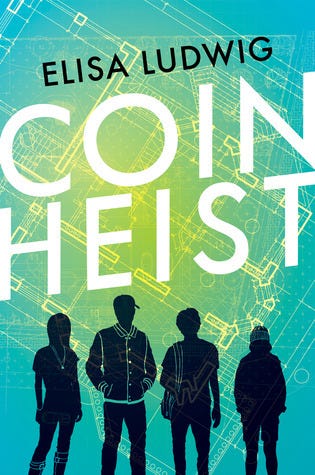
The film’s premise unfolds with the urgency of a classic caper but carries an emotional depth rooted in adolescence. The new girl, Dakota (Alexis G. Zall), enters a world where social groups are rigid and expectations suffocating. She longs to be more than just another outsider. Her partnership with Jason (Alex Saxon), the principal’s son weighed down by family shame, becomes the unlikely center of the plan. Add to the mix hacker-cynic Benny (Jay Walker) and confident, socially poised Alice (Sasha Pieterse), and the story transforms from a simple scheme into a study of fragile identities under pressure.
Their plan is technically daring but emotionally reckless. By deciding to commit a federal crime, the teens convince themselves they are acting for the greater good—to save their school and restore its reputation. The heist becomes a stand in for their internal struggles. Each coin they plan to create represents a desire to revalue their own worth, to prove they matter in a world where adults have failed them.
Hagins’ direction treats the operation not as a spectacle of crime, but as a metaphor for the process of self-reinvention. The close, almost claustrophobic cinematography of the mint scenes heightens the tension, capturing the delicate balance between ambition and fear that defines adolescence.
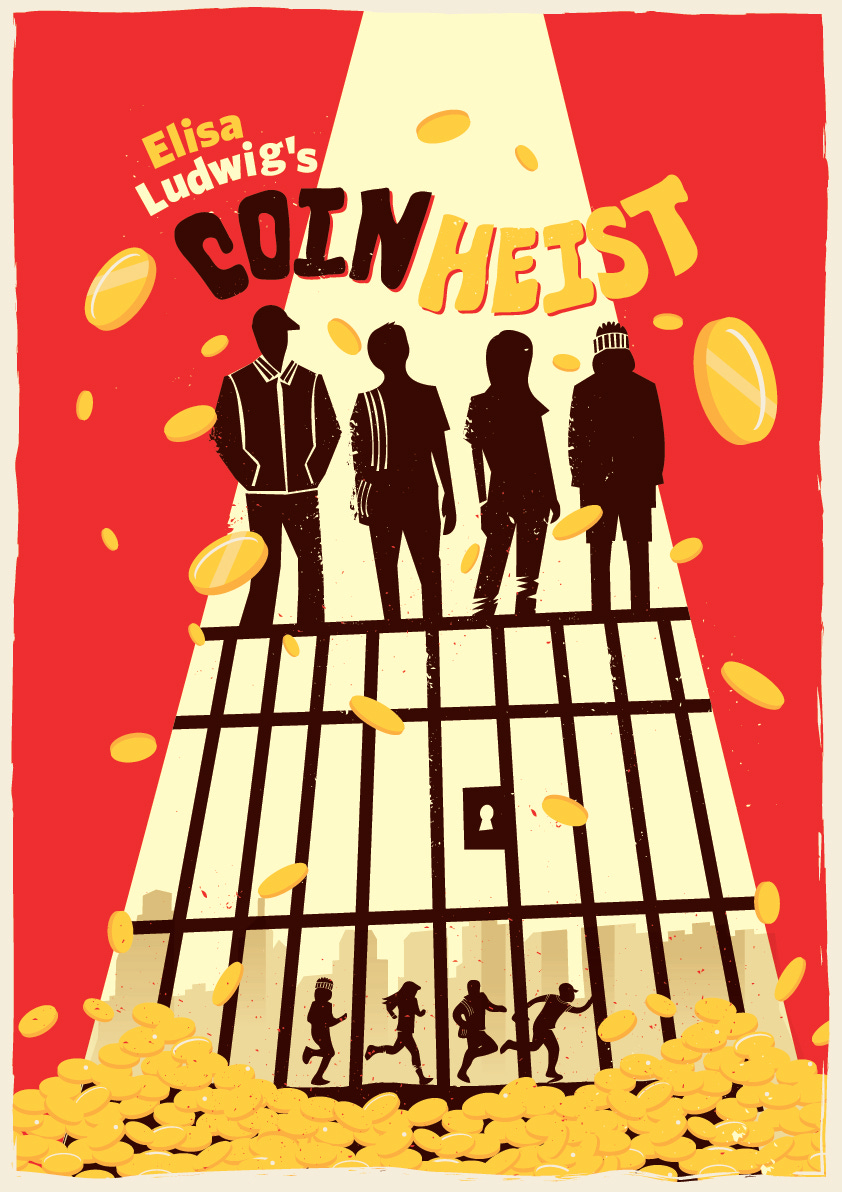
As the group’s unity begins to fray, the moral stakes rise. The question of whether the ends justify the means splits them apart, revealing their personal motivations more starkly than any argument could. For Dakota, the crime is a means of belonging. For Jason, it is a chance to reclaim dignity after his father’s disgrace. For Alice and Benny, it is a rebellion against the invisible systems that favor some and fail others. Their conflict lays bare the thin line between courage and desperation. When their actions threaten to consume them, the film pushes its characters to confront what it really means to make things right.
Coin Heist refuses to glorify rebellion or disguise it as heroism. Instead, it asks whether integrity can survive when survival itself depends on bending the rules. The film’s quiet power lies in its restraint. It doesn’t rely on explosive action or overwrought sentiment. The tension comes from watching smart, well-meaning kids realize every shortcut comes with a cost. In the process, they grow into the earned truth that belonging cannot be manufactured, and identity cannot be forged in secret.
Hagins’ film blends suspense with sincerity, offering a contemporary yet timeless coming-of-age story. Coin Heist begins as a tale about a scheme to save a school but becomes something far more personal—a portrait of young people learning to navigate the blurred boundary between right and wrong, and discovering that real worth, like genuine connection, can never be faked.
Paul Bishop is the author of fifteen novels, including the award winning Lie Catchers. He is also the editor of 52 Weeks 52 Sherlock Holmes Novels—a multi-author compendium of essays regarding fifty-two of the best Sherlockian pastiches plus much more—Available on Amazon or from Genius Books...