
DOUBLE DARE
THE PROFESSIONAL THIEF AS RELUCTANT ASSET

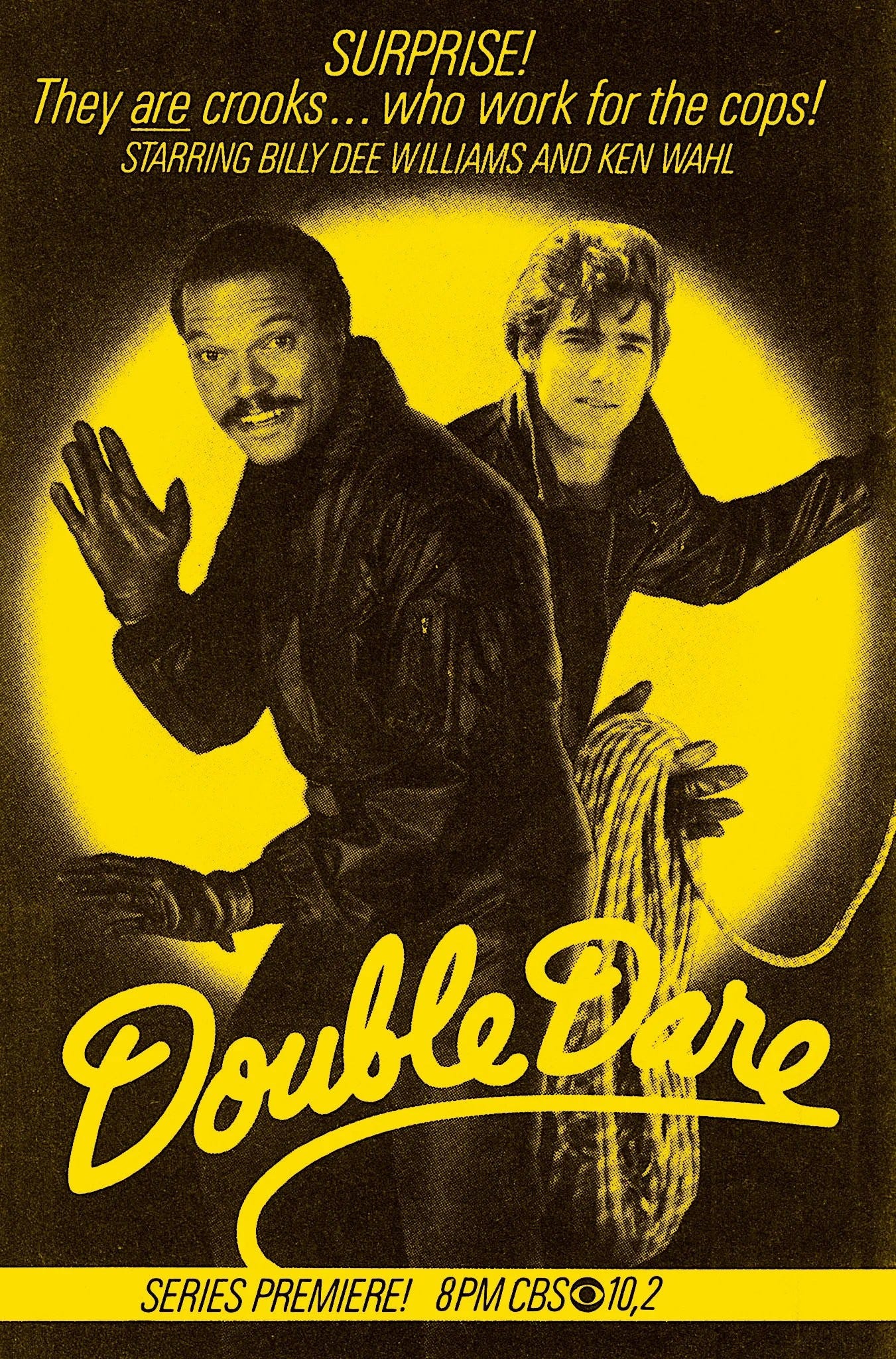
Television crime drama in the mid-1980s carried a restless energy. Networks searched for hooks which could stand out in crowded schedules, often turning toward characters who lived outside the law yet operated with skill and precision. Double Dare, a short-lived series created by Garry Michael White and developed by Leon Tokaty, arrived during this period with a familiar premise and a confident cast. Broadcast on CBS in 1985, the show occupied a Wednesday night slot at eight o’clock, a position demanding broad appeal and immediate clarity. It delivered both, though not for long.
The concept leaned on established ground. A skilled thief, Billy Diamond, played by Billy Dee Williams, is caught by San Francisco Police Lieutenant Samantha Warner. Rather than process him through the system, she offers a bargain. His talent has value. His freedom depends on whether he can apply it in service of law and order. Diamond accepts, but with a condition of his own. His former partner, Ken Sisko, portrayed by Ken Wahl, must be released to work alongside him.
Two criminals become assets. Two men accustomed to operating outside structure step into a framework built on rules. This arrangement places Double Dare within a recognizable lineage, one anchored by It Takes a Thief. The earlier series followed a similar logic, a thief recruited to assist authorities by doing what he does best. The appeal rests in inversion. Skills once used for personal gain now serve institutional goals. Locks, alarms, and routines designed to keep criminals out become tools for entry, analysis, and capture. The audience gains access to a professional mindset rarely explored through conventional police characters.
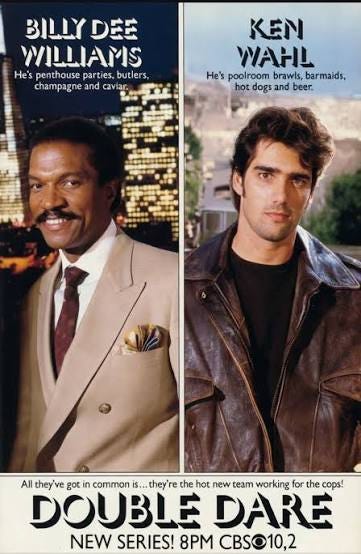
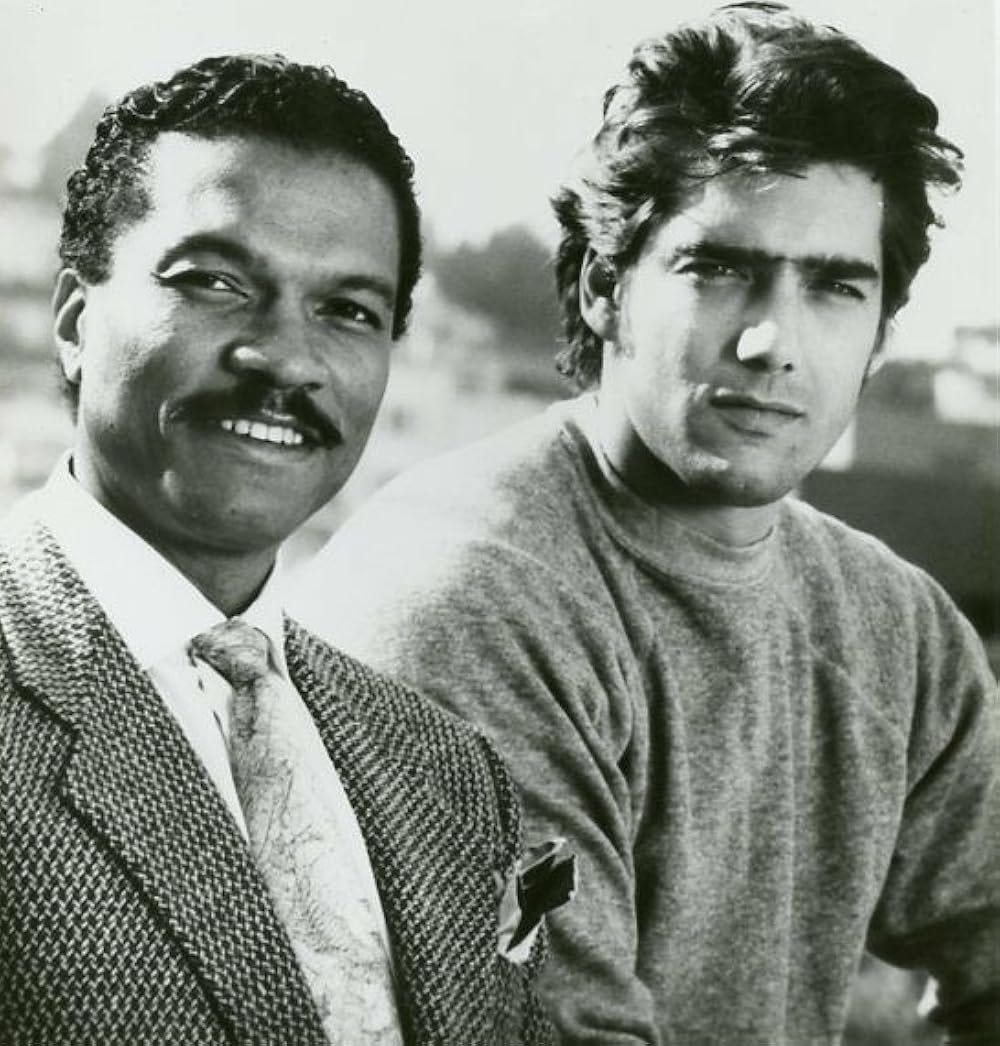
Billy Diamond carries experience, polish, and a measured presence. Williams brings ease to the role, a sense of control rooted in confidence rather than force. Diamond does not rush. He studies a space, weighs options, then moves with intent. His partnership with Ken Sisko adds tension and momentum. Wahl’s performance leans more kinetic, more volatile, creating a dynamic built on contrast. One man calculates, the other reacts. Together, they form a unit capable of adapting to shifting conditions, a necessary trait when assignments move beyond routine police work.
Lieutenant Samantha Warner anchors the arrangement within law enforcement. Her position requires balance. She must justify use of two convicted criminals while maintaining authority over them. The relationship carries an edge. Trust does not come easily, nor should it. Each operation tests boundaries. Every success reinforces the value of the arrangement, while every misstep threatens to collapse it. The structure depends on discipline, yet the men she relies on built their careers avoiding such constraints.
San Francisco provides an ideal backdrop. The city offers visual variety, steep streets, dense urban spaces, and a long history tied to crime narratives. For a show built around infiltration and access, environment matters. Warehouses, high-rise offices, and private estates create opportunities for inventive entry and escape. The setting supports the premise without overwhelming it, allowing character interaction and procedural detail to remain central.
The series emphasizes method over spectacle. Each episode builds around a problem requiring specialized skill. Diamond and Sisko do not approach assignments as police officers would. They consider vulnerabilities, patterns, and human behavior from a different angle. Security systems become puzzles. Guards become variables. Timing becomes critical. Their approach reveals how crime prevention and crime execution share common ground. Understanding one side provides insight into the other.
This focus aligns with a broader theme present across many crime dramas. Institutions rely on structure, yet individuals often drive outcomes. Diamond and Sisko operate within a system not built for them, yet their effectiveness stems from independence of thought. Warner represents institutional authority, but she recognizes limits of conventional methods. By bringing these elements together, Double Dare explores a hybrid model of investigation, one where official channels intersect with unconventional expertise.
Despite its strengths, the series faced a difficult environment. Network schedules in 1985 offered little room for gradual growth. Shows needed to secure an audience quickly or risk removal. Only seven episodes were produced, with six reaching broadcast. Such a brief run limits development. Characters hint at deeper histories, partnerships suggest evolving trust, yet time never allows full exploration. What remains on screen serves as a blueprint rather than a completed structure.
There is also a question of tone. The premise invites a blend of action, character interplay, and procedural detail. Balancing these elements requires precision. Lean too far toward action, and the concept risks becoming generic. Focus too heavily on character, and pacing may slow beyond what network expectations allow. Double Dare finds moments where these elements align, yet consistency proves difficult within its short lifespan.
Even with limited exposure, the series contributes to an ongoing conversation within crime television. It reinforces the idea expertise exists outside official channels. It suggests law enforcement, at times, must adapt by incorporating skills not traditionally accepted. Diamond and Sisko embody this tension. They are neither fully reformed nor entirely trustworthy, yet their value cannot be ignored. Warner’s decision to use them speaks to a pragmatic approach, one grounded in results rather than strict adherence to protocol.
The title carries its own meaning. The term double dare implies risk, a willingness to push beyond safe limits. Each assignment carries stakes beyond success or failure. Freedom hangs in the balance for Diamond and Sisko. Professional credibility rests on Warner’s choices. The system itself faces challenge when it bends to accommodate individuals who exist outside its norms.
The short-lived Double Dare was not unique enough in concept or execution to avoid sinking into trivia only obscurity. However, it remains an example of how crime drama can explore professional skill from an unexpected angle. The thief, when placed under pressure and given purpose, becomes more than a criminal. He becomes a specialist, one who understands access, timing, and human nature in ways few others can match.
Interesting! I don’t remember that one at all. Very ‘80s. https://youtu.be/uLRqmisul78?si=VzHOI51Q4fjQhR59
Interesting! I don’t remember that one at all. Very ‘80s.