RED NOTICE
CHASING SHADOWS

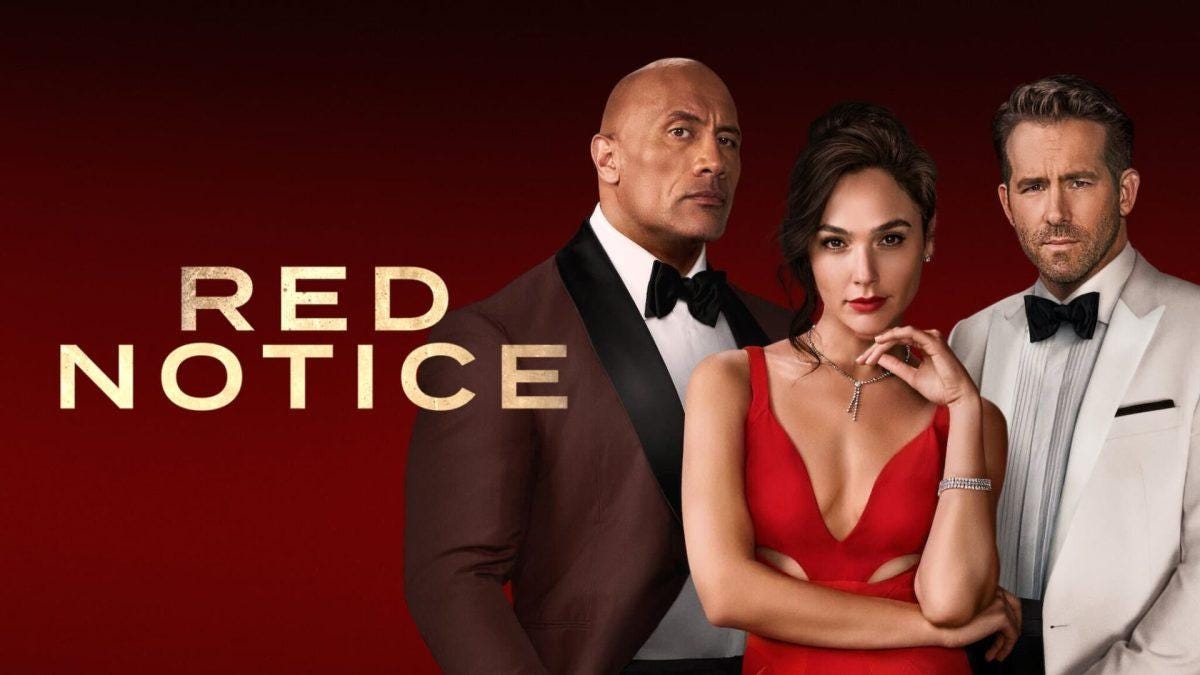
Ryan Reynolds walks into a Rome museum like he owns it—which, for a few chaotic minutes, he nearly does. As Nolan Booth, the world’s most wanted art thief, he moves through marble corridors with the easy confidence of a man who has already cased the exits, timed the guards, and decided the worst outcome is still better than boredom. Dwayne Johnson’s John Hartley, FBI profiler and designated adult in the room, arrives to stop him. Neither man gets what he came for, and the film is off and running from there—loud, funny, and cheerfully aware of its own absurdity.
Directed by Rawson Marshall Thurber, Red Notice is a globe-trotting heist comedy built on shifting alliances and cheerful betrayal. Its MacGuffin is Cleopatra’s legendary golden eggs, ancient relics now chasing a black-market price, but the real currency of the film is the reluctant partnership forced on two men who would genuinely prefer not to be in the same room. When Hartley gets framed and thrown into prison alongside the thief he was hunting, the only exit available requires cooperation. Neither man is happy about it. The movie milks that unhappiness for everything it’s worth.
Booth runs on charm and improvisation. He talks his way through problems Hartley would shoulder through, and he finds a kind of wicked joy in watching the profiler’s rigid sense of order bend under pressure. Hartley, in turn, keeps Booth’s reckless instincts from getting them both killed—or at least delays the inevitable. The dynamic is comic and tense in equal measure, built on mutual exploitation and edged, reluctantly, by something closer to respect. Reynolds’ motor-mouth energy plays beautifully against Johnson’s deadpan endurance, and their scenes together generate the kind of friction where you root for both men to win even when they’re working against each other.
Standing between them—and above them, most of the time—is The Bishop. Gal Gadot plays her with a sleek, unhurried menace, a figure who moves through cathedrals, private galleries, jungle ruins, and high-security vaults with the composure of someone who is already three moves ahead of the room. Her motives stay opaque long past the point where the script dangles explanations, and the film is wise to protect them. The moment you understand The Bishop completely, she loses her power.
What makes her work as a character—and as a structural device—is the way she reframes everything around her without appearing to try. Booth and Hartley are always reacting, always catching up, always recalculating their position relative to hers. She doesn’t chase. She arranges. The distinction matters in a film built on pursuit, because it makes her the only person in the story who seems to be playing a different game entirely—one with a longer clock and a higher ceiling than either man can quite see. Gadot plays this with cool precision, never tipping into camp, never letting the composure crack into caricature. The Bishop’s confidence is the real weapon, and she deploys it like someone who has never once doubted the outcome.
Her best scenes arrive not in confrontation but in the moment just after—when Booth or Hartley realize she was three steps ahead of whatever clever thing they just did. The satisfaction on her face in those moments isn’t gloating. It’s closer to the quiet pleasure of a craftsman watching a plan execute exactly as drawn. In a film about people who live by deception, she’s the one character whose deceptions feel genuinely architectural rather than improvised.
Visually, the film earns its streaming budget. Rome, Bali, Egypt, and the tunnels of South America all get their moment, and the action is staged with enough scale to satisfy the blockbuster appetite without letting spectacle swallow character. The heist sequences hit the standard beats—misdirection, close calls, last-second pivots—but the choreography stays nimble, leaving room for the comedy to breathe. The film knows what it is, and it commits.
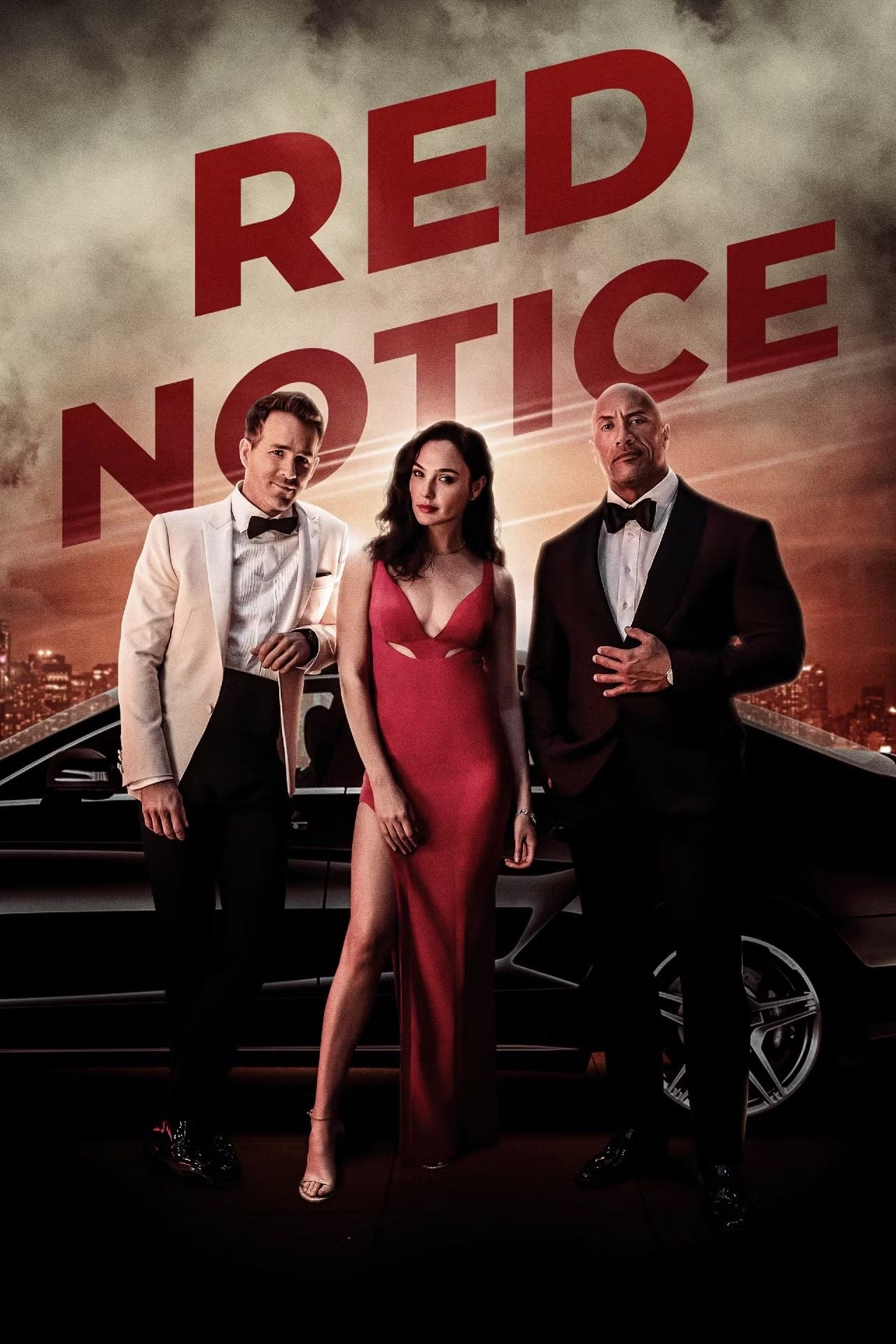
The final act turns the story inside out. Alliances revealed, motives recalibrated, the ground stripped from under every assumption the audience accumulated across the previous two hours. The golden eggs, it turns out, matter less than who ends up holding them—and even that is subject to revision. Underneath the quips and the spectacle, the film is about the hunger for recognition in a world where winning means nothing if nobody knows you did. Booth wants to be famous for it. Hartley wants to be right. The Bishop wants to be first. None of them is entirely wrong.
Red Notice thrives on contradiction—lawmen who steal, thieves who occasionally save the day, treasures worth less than the thrill of the chase itself. It wears its self-awareness openly, winking at the audience through every double-cross and reversal. The final image isn’t resolution—it’s ignition. For people who live by wit and deception, the next scheme is already in motion before the credits roll.
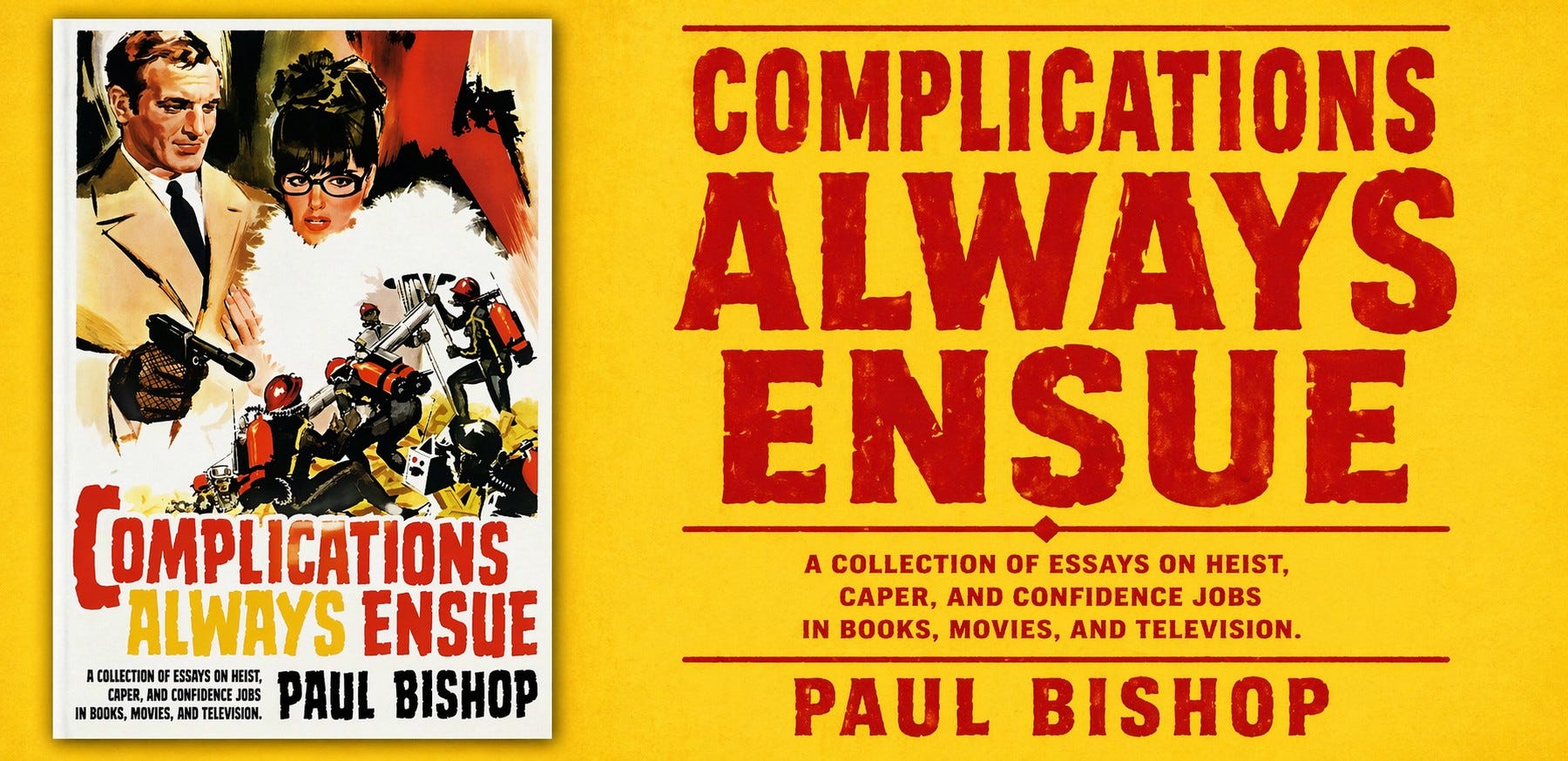
Paul Bishop is the author of fifteen novels, including the award winning Lie Catchers. He is the editor of the popular 52 Weeks * 52 Sherlock Holmes Novels and the author of the forthcoming Complications Always Ensue, a collection of his essays featuring heists, capers, and confidence jobs in books, movies, and television—Available June 18th, 2026 via Amazon or from Genius Books...